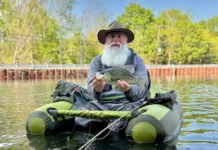
If you’ve ever wondered why some anglers seem to always be in the right spot at the right time, this episode digs straight into that idea. In this conversation with Simon Chu, we talk about New Zealand fly fishing, spring creeks in Montana, and why slowing down and walking often reveal what boat fishing hides.
Simon spends his seasons split between hemispheres, guiding and testing gear in some of the most demanding conditions on the planet. We get into Patagonia waders, sight fishing big browns, and the mindset shift that comes from hunting individual fish instead of covering water.
Simon is part of Patagonia’s testing team, meaning he fishes new gear hard long before it ever reaches the market. His role isn’t about talking gear, it’s about breaking it in real conditions.
He puts waders and packs through 150-plus days a year of walk-and-wade fishing, guiding, and traveling across hemispheres.
One of the big themes in this episode is the difference between moving water quickly and slowing things down on foot. Simon explains how boat fishing can feel like a video game, hitting spots and moving on fast.
Walk-and-wade fishing forces patience. It creates time to watch fish behavior, read water carefully, and make deliberate decisions.
This approach carries over directly into spring creeks, New Zealand rivers, and anywhere fish demand stealth and precision.
Simon spends his Northern Hemisphere season based out of Bozeman, fishing southwest Montana. He focuses heavily on spring creeks and smaller waters that reward careful movement and observation.
These fisheries mirror many of the challenges found in New Zealand, especially when it comes to sight fishing and pressure-sensitive trout.
New Zealand fly fishing is less about numbers and more about one-on-one encounters with individual fish. Most days are spent hunting visible trout rather than blind casting to water.
Simon recommends at least five full fishing days for a first trip, plus extra time to experience the country itself.
If you land two or three quality fish a day, that’s considered a very good trip.
Much of the iconic scenery anglers associate with New Zealand comes from the South Island. Rivers change dramatically within short distances, from braided glacial systems to spring creeks and coastal rivers.
This diversity is part of what makes planning a trip both exciting and overwhelming.
Prime time for New Zealand fly fishing runs from mid-January through early March, when weather is more stable and dry fly fishing peaks.
While mayflies and caddis exist, much of the fishing revolves around terrestrials.
Fish are opportunistic and feed heavily, which contributes to their size and aggressive takes.
Simon believes most mistakes happen before the first cast. The key is observation.
Your first cast is often your best cast, especially with pressured or sighted fish.
Simon works with Anglers Academy, where the focus is on skill-building rather than simply catching fish. The program prioritizes casting, presentation, and understanding process over outcomes.
The goal is to make anglers better long-term, knowing that fish will always have the final say.
Episode Transcript
WFS 883 Transcript 00:00:00 Dave: Simon Chu is booked years out. Fish s two hemispheres and spends more days on foot than most anglers spend thinking about fishing. He guides spring creeks in Montana. Sight fishes, wild trout in New Zealand and test gear for Patagonia by fishing it until it fails. Not by talking about it, not by spotlighting it. No noise, just time on the water and decisions that hold up when conditions get demanding. This is the Wet Fly Swing podcast, where I show you the best places to travel to for fly fishing, how to find the best resources and tools to prepare for that big trip, and what you can do to give back to the fish species we all love. Simon Chu is here today, uh, on the podcast, and we’re going to find out why Simon believes most errors happen before the first cast. We’re going to find out what walking and waiting reveals, that boat fishing often hides how sight fishing New Zealand reshapes patience and decision making. And we’re also going to get some details on how to test fly fishing gear in real conditions. We’re going to jump into all this about Patagonia. We’re going to talk waders. We’re going to go down some random tangents. We’re going to get on some serious history here as well today. So this is a fun one. I enjoyed it with Simon. You can check in with him anytime on Instagram. Or you can go to Patagonia Comm if you want to check out what they have going there as well. All right. Here he is. Simon Chu. How’s it going, Simon? 00:01:21 Simon: Good, mate. How are you? 00:01:22 Dave: Good good good. Great to have you on the podcast. We’ve got a lot to talk about today. I think we’re going to talk about, um, you guide in New Zealand. You’re back now for a little bit of a break. But we’re going to talk about New Zealand. Maybe give people a taste of that. We’re going to talk about Patagonia, because you’re an ambassador and dig into some of their waiters and what they do there. Um, and also you’ve got a fly fishing school that you also do and probably a bunch of other things I’m not thinking about here. But first off, before we get into all that, take us back real quick on fly fishing. What’s your first memory out there? You’ve been doing this a while. 00:01:54 Simon: Ah, yes. I’ve been fortunate enough to be doing it for the last forty odd years. Um, and probably my most, uh, maybe my first memory, apart from my dad bringing home an old fly rod was, um, looking upstream and, um, catching my first fish downstream when I wasn’t watching because, uh, he kind of took my fly. Um, but I really didn’t know what I was doing. But that was the start of a of a journey. Really? 00:02:18 Dave: Yeah. Where was that? Where were you at when you. Where did you grow up? 00:02:20 Simon: Yeah, I grew up in New Zealand. I grew up, uh, in the Manawatu. And, um. Yeah, I used to bike down, um, about ten minutes from my house to, uh, the Manawatu River. And, um. Yeah, it was, it was full of trout, so. And it’s still full of trout, which is kind of cool. So that was that was, uh, my childhood. 00:02:37 Dave: Really nice. How do you spell that River? 00:02:40 Simon: M a n a w a t u one oh two. It’s, uh, near Palmerston North, um, in the North Island of New Zealand. 00:02:49 Dave: The North Island. Gotcha. Yeah. This is going to be great because I think that we hear a lot about New Zealand. I think a lot of people want to go to New Zealand just because you hear about it. If you haven’t been there and it sounds like it’s amazing and you’ve got, you know, you’re not too far from Australia, but it sounds like New Zealand’s maybe more of the, the natural wonder and beauty and all that. So we’re going to talk more about that today for sure. Let’s let’s start with, you know, what is a topic that’s been on my mind a lot is the the swift current waiters. You know, I’ve got a pair of those I’ve, we’ve been talking a little bit about you know kind of what they do. What’s your first off on the connection to Patagonia. Maybe describe that. What’s your connection there and how are you affiliated? 00:03:28 Simon: Yeah. No, I’m very fortunate. Um, I’m part of a team of, uh, testers, uh, for Patagonia, and, um, I’m an ambassador for Patagonia. I’m very fortunate. I get to to test and try, um, a bunch of, uh, products before they come to, um, to market. We I get to bash them around. Actually, I get to I get to, you know, work the product as hard as, um, I can I I fished with them in all conditions. I primarily, um, walk and wade fish. So the waders get, get quite a, um, a workout. Hence I get an opportunity to test them because, uh, I guide and I fish probably about one hundred and fifty days a year. So, um, you can see if something’s going to work or not. 00:04:16 Dave: Right. What was your when you were first doing it? Because I have the swift current, whereas I have now, you know, I haven’t had any problems. I’ve got some features with them that I really love. But early on when you were testing them out, were there any anything that you were seeing that you were thinking, okay, this is something they could do differently or add this feature or something that’s on them now that you really love. 00:04:34 Simon: Well, I really do love the Swift Current Wader. We had an opportunity to test them. Look, there were several materials, I think, that were tested in the course of, um, of using them. And, uh, I just love how durable they are. They I mean, obviously the fit, it’s just basic pockets and stuff like that, the ability to push it up and down very easily. I probably I mean that’s clutch. 00:04:56 Dave: Yeah. What is that feature. That’s an interesting one because that’s one that I don’t think everybody has. I’m not sure if anybody has that. But it’s this feature where you’ve got them as full waiters that come all the way up. But then you can slide them with these kind of suspender systems down to be almost like waist talk about what that is. Is that what the feature is one hundred percent? 00:05:12 Simon: Um, you know, it’s not just specific to that waiter, but, you know, I mean, they’ve really got it right in that the amount of, you know, even to the extent, the amount of material and how the pockets are designed, you can actually push that waiter down. It doesn’t bunch. It doesn’t. I mean, obviously there’s material, but it sits very well, can be used as a waist waiter, which is about ninety five percent of the time for me. And then if I’m going to deep Wade or for instance, you know, it’s belting down with rain, I can pull it right up, um, be warmer, be drier, uh, way deeper, uh, and use it as a chest waiter. But the rest of the time, you know, from a comfort point of view, um, I essentially can wear it like a waist waiter. 00:05:55 Dave: Yeah. Waist waiter. Okay. What is the I mean, Patagonia to me is kind of, you know, blows me away. We had Yvon Chouinard on the podcast and he talked about his ethos and the company and the founding and stuff. But it seems like, you know, and I’ve heard people that want to become ambassadors, right? They’re like, how do I get involved? It seems like you’re there. How did that come to be? Is that something that was just organic, or did you, you know, did you reach out to Patagonia? 00:06:20 Simon: Well, thanks for asking, Dave. No. Look, um, my whole flyfishing career and and all my skill set is always, um, on the shoulders of others, honestly. So as part of the work I was doing at Anglers Academy and some of my previous roles, I was fortunate enough to be connected with a couple of folks, uh, like Brian Gregson, uh, Carl Toyama, and guys that were already involved in Patagonia. They kindly asked me to try a few things, and one thing led to another. And then, uh, I was I was fortunate enough to be to be asked to, um, contribute a little bit further. And, you know, as you said, Patagonia is such a great company, um, with such a great ethos, I loved it. I took that opportunity and, um, couldn’t say yes fast enough. 00:07:07 Dave: Right, right. So you obviously knew about them before you jumped on as an ambassador and are there, you know, other than the waiters, are there other products that you’ve tested or used before that they’ve gone out to the public? 00:07:18 Simon: Yeah. So, um, everything from, um, clothing to, um, packs. 00:07:24 Dave: So, yeah, I think that, you know, one of the things that I’ve been looking at is, you know, getting a new pack, right? Whether it’s a I’ve always used a vest before, I’ve been using slings and I got everything. But what’s your go to. Are you more of a vest or pack or what’s your go to pack. 00:07:39 Simon: Well, I have been since I’m an old guy. I’m generally a vest guy, but. 00:07:42 Dave: Well, I know they said on that podcast I did with with Nick when we did that one. I know I mentioned this and they said, hey, vests aren’t gone. You know, I think Patagonia might have something coming. Well, actually, they do have a vest out right now. I see one. The stealth convertible vest is out there. 00:07:55 Speaker 3: Yeah, the stealth vest. 00:07:56 Simon: Yeah, well, there’s that. And there’s also stealth pack vest. I mean, the stealth backpack. So that whole series, I actually think it’s the stealth series is what you’re thinking of. Not the Goldwater series. 00:08:06 Dave: Yeah, it’s a stealth I’m looking at now. Yeah. You got the stealth. The one I’m thinking of is the stealth switch pack. The nine liter, that one becomes a bunch. But I also see now there’s a five liter. There’s like a bunch. There’s a backpack, there’s the guy. There’s a ton of things. So again, I’m I was thinking there’s one. But obviously Patagonia has a whole lineup here. 00:08:23 Simon: A whole lineup. And I’m I’m a vest guy. But, um, I wear a pack to guide. And, um, increasingly when I fish by myself simply because, uh, again, we tested a lot of the stealth products, like the stealth, you know, sling pack and the backpack and so on. Increasingly, I find myself using, you know, maybe a sling bag or. Well, actually, I use what I’m testing, quite honestly. Um, yeah. So, uh. Yeah. And to and to give you an idea, one of the things that absolutely blew me away in this, um, role of elf tester was just how stringent and how Patagonia listened to the feedback. I mean, obviously useful feedback has to be good feedback. And there’s a team of us giving feedback, but, uh, I wore a top, for instance, and I’m very fortunate. I live pretty close to, um, who I report to as far as giving some feedback to. Well, you know, we test all these different materials. Well, the material pills, you know, wearing a pack or wearing my vest or it catches very easily. I’m just amazed at how quickly Patagonia. Well, that’s not good enough. We let’s put that aside and let’s try something else. You know, pedagogy really do. They do the mahi, the work. 00:09:41 Dave: They can tweak it. They can take that advice from you and feedback and tweak it and bring out a new one, a new product. 00:09:47 Simon: Yeah, they really do. And they’re not prepared to sort of settle for oh, that’s good enough. They really want to know does that really work. Does that you know, how would you change that. Um, what do you think’s interesting about that or how that look? I’m testing a sort of a sling bag thing now, which, you know, I don’t think it has quite a name yet, but, uh, like, the zippers are props. Um, they go they you can really open it up so it becomes quite a big workstation. And, um, in my world, some of my feedback has been, look, when I opened up these zippers, stuff falls out. Especially, you know, I’m in a hurry. I don’t know how you go with your stealth pack, but sometimes I leave a zipper open. Right? 00:10:31 Dave: Yeah, right. 00:10:32 Simon: And, um, when you leave a zipper open, you lose fly boxes and. 00:10:35 Dave: You lose stuff. 00:10:36 Simon: You lose stuff. And that’s quite an investment. So, you know, how can we create something that’s really useful. It opens up, it makes it accessible. But if I leave the zipper open because I’m in a hurry, I’m not going to lose stuff. 00:10:50 Dave: Yeah, no. That’s great. So basically that’s the yeah, that’s some of the feedback. And how long do you typically are you using these things testing them before they they maybe go out to the market. 00:11:00 Simon: Um, you know, at least six months to twelve months. I mean, so, you know. Yeah, because I’ve got a continuous season. So I, I’m very fortunate. I lead the summer. I guided Montana in the, you know, fall through to spring. I’m in New Zealand, um, fishing down there and guiding. So. Yeah. 00:11:19 Dave: That’s awesome. You got the best of both worlds. You’re guiding in two of the best places, probably to be in New Zealand and Montana. Well, I want to talk more about that because I do want to hear about Montana. You’re fishing there as well. But the product thing is interesting to me because products are not easy. You know, I mean, products can go fail like the best of the companies can have issues. But I think that what Patagonia has done is they’ve tried to get in the hands of people like you ambassadors to really just test it, tried to break it, and then hopefully by if that happens, they can fix it and then before it goes out to the market, because I know just recently, you know, it was Christmas here recently and I got a pair of shoes. I probably shouldn’t say the brand name, but it was a it was a company that I hadn’t gotten a while and I just picked them up and and man, I’ll tell you what, right out of the box, I put those things on and they started like literally giving me a, a sore on my foot. They were that uncomfortable, you know? And I feel like now is that, is that the company because they built a product that didn’t test it, or is that just my foot didn’t fit the shoe? I think it’s the company, because I feel like whenever I buy a pair of new hiking boots, if they fit like a glove right out of the box, I’m like, okay, that’s my shoe, but you know what I mean? Like, what’s your take on that? Do you feel like, you know, their products are just bound to have issues and that’s the biggest struggle with making a great product? 00:12:36 Simon: Look, I think I think we humans are such individuals that products still have to be made for perhaps the majority, but you do want to take them to extremes. The product in the testing stage, because you want to find the outliers, and you want to make sure that you’ve thought of, you know, as many things as possible. And of course, you know, I mean, I don’t think the shoes, it’s so much, but, um. 00:12:59 Dave: Well, a shoe, a shoe and a boot. Right? Think of it. Right. The Patagonia I know has another new boot coming out. Same a similar thing, right? That’s not an easy thing to make for somebody who maybe has a skinny foot or a wide foot. 00:13:09 Simon: And you know, that feedback. Um, I can say this. I’m sure you know that feedback Patagonia take on board because, for instance, you know, in the boot, if there’s a bunch of feedback that’s saying, well, the boot last seems a bit narrow, you know, and there’s some feedback coming through that it’s a bit narrow. Patagonia will do something about it. I know that for a fact. So, you know, obviously, you know, you just can’t pick out night outlier. And there is an average, I’m sure. But, um, you know, I think good companies listen to their, um, their customers and do take on board feedback from their team of testers, um, of which, you know, I’m just one. Yeah. 00:13:48 Dave: So, yeah, you’re just one. You’re one. And the big the big picture. Yeah. And we haven’t talked to, uh, well, I mean, another one I know who’s a good friend of mine and I fished with is Jeff Lisk out in the Great Lakes. And he’s definitely one of the hardest working guys I know out there. Right. So we’ve talked to him a little bit about over the years. But but yeah. No, this is great. Well, I think that we’re going to talk more about this as we go just with the products, because again, I’m hopefully in the market to pick up that stealth switch pack. But let’s talk fishing a little bit because you mentioned Montana. You mentioned New Zealand first off on Montana. Where where are you fishing? Montana. What rivers are you focusing on? 00:14:21 Simon: Okay. So I’m based, um, in, uh, southwest Montana in Bozeman. And, um, I get to fish the rivers like the shields. And, uh, because I walk Wade, I actually get to fish a bunch of rivers, um, that are on private leases. So I get to fish the spring creeks in Livingston like Depew’s and Armstrong’s, which obviously you can book. And I got on those streams. 00:14:49 Dave: Oh, wow. Cool. So you’re fishing some majority Spring Creek type fishing. 00:14:53 Simon: And small water. So, um, yeah, it translates really well to my, my New Zealand experience. I mean, I’m not a fabulous rower, so, you know, I’m Kiwi. I didn’t grow up rowing. 00:15:04 Dave: Yeah, I think the walkway is cool because, you know, you’ve got all the boat fishing, which I think is great. I think a lot of people can utilize the boats. I think it’s a good, you know, you hear a lot about it, the, you know, the indicator fishing and stuff. But I think the cool thing about walking weight is you really you get there. And I mean, do you feel there’s a big difference between that? Do you think you’re learning more when you’re walking, waiting versus, say, maybe being on a boat, being guided? 00:15:27 Speaker 3: Uh, I absolutely do. 00:15:28 Simon: And, you know, here’s perhaps the the primary difference is that you’re not under a time, you know, you’re not moving. So, you know, invariably you you can have a chance to look at your situation and then work it out. Whereas in a situation when you’re moving, you’re going to cover a bunch of fish and all the rest of it. And my very first experience, I felt like a video game to me, you know, you know, because I grew up in New Zealand worldwide, you know, so sitting in a boat and banging the banks or whatever was, was foreign to me. So coming here, it was like, oh, wow. Okay. So bang the banks hit that spot. You know, I mean, reading the water is one thing, but, um, you know, and it’s fun, but, uh, it was it was kind of like, hit that, hit that. Oh. We’re moving. Oh, you missed that one. Hit the next one. Whereas, you know, walking, um, things just happen a little slower, obviously. But, you know, each individual fish can be it can be kind of an exclusive experience, you know. 00:16:26 Dave: Yeah. It feels like, you know. Yeah, you have more time. You can sit there and watch the fish and observe and take your time and maybe not even make a cast until you know what exactly is going on. Whether the fish is eating below the surface, just below the surface, or maybe on the surface, right. And then you’re doing all that, and then you get in a position to make that one cast, maybe. Well, this has been good. I think that, you know, that Montana is something we’re laughing because we’re going to be going to Montana. I love the Spring Creek truck. I do want to talk New Zealand because you’re such an expert on that section. Maybe let’s start high level a little bit. First off on New Zealand, if somebody is thinking about heading over there, is this something where you know you need like what would be a good length of time to do a good New Zealand fly fishing trip? 00:17:09 Speaker 3: Well, I’d. 00:17:09 Simon: Like to encourage anybody to go for at least five days just to fish and then stay stay longer to see our country, you know, um, and experience some of the culture and, um, everything from our indigenous culture there, the Maori to, you know, a meat pie and hokey pokey ice cream. Um, I think it’s all worth doing. But five days fishing, um, you know, a couple of days to get, you know, um, a feel for it and then, um, two or three days, perhaps in addition to that, so that those expectations you might have had, um, coming into New Zealand, you know, you can bring your, um, your game and have a really good crack at achieving, you know, perhaps, uh, some very, very memorable fish. 00:17:53 Dave: Yeah. Where would be, you know, because you got the couple the two islands. Where would be a good place. You know, where do you start if you want to go fish? I mean, maybe we could talk about your program, but where do you think is a good place to start to fly into and then to go to cover? 00:18:06 Speaker 3: Okay. 00:18:06 Simon: Most most, um, the entry point will be the Auckland or Christchurch. And then after that, you know, the spectacular scenery that you see on YouTube and a lot of, um, the media is the South Island. 00:18:18 Dave: Is the South Island, the less inhabited, the less less people. 00:18:21 Simon: Less inhabited. Yeah. And it has the, you know, the spectacular scenery that you see on all of the rings and all the rest of it. The North Island, though, has, um, a bunch of fishing. Basically, I’ll tell you folks that any river with a name has trout in it. South of Auckland. So there’s a lot of fishing in New Zealand. 00:18:41 Dave: There is. So you have the scenic beauty, which is amazing. Do you also have is the fishing pretty spectacular? Do you get lots of fish? Large fish. Talk about that a little bit. And then where do you guide. Where’s the area when you go back here in a couple of months. Where are you going? 00:18:55 Simon: Yeah, in a couple of weeks I’ll head back. Um, I’m south of Queenstown, so I’m in the sort of they would consider, you know, the bottom half of the South Island, if you’d like. That spectacular scenery, I think. I think it’s the South Island, for sure. Um, but the whole of the South Island has, you know, so many unique rivers and, um, the scenery changes so much and very, very quickly. New Zealand’s only a little country. It’s an island, um, or a series of islands, actually. And, um, you know, within an hour or two hours driving, you can be at the mouth of the river where it flows into the sea, chasing sea run fish, you know, chasing fish that are chasing sort of like smelt type fish. Uh, bullies. Two hours later, you’re at the headwaters of that same stream. It’s maybe only two minutes wide, and, you know, you’re chasing sort of super nice resident fish on a dry, fly eating cicadas, you know? So. 00:19:51 Dave: Oh, wow. 00:19:51 Simon: Yeah, just things just change, um, like small and the variety of sort of, um, flora and, uh, landscapes, just, you know, everything that you can imagine. 00:20:03 Dave: Right? Right. This is awesome. What are the species that are mostly that you’re fishing for? 00:20:07 Simon: Browns and rainbows? 00:20:08 Dave: Yeah, Browns and rainbows. So. So now and I’m not sure. I mean, we don’t have to go back too far, but on the history of all this, are those do you know, I guess some point those were stocked in that area, but, um, why do they grow? You know, first off, is there a little bit of history there? And then why do they grow so large? What’s the, you know, the story. And do they is that something that people are going down there to find some big fish? 00:20:32 Simon: Yeah. So, um, perhaps New Zealand is known for, you know, large fish, um, that folks can get and, and sometimes, you know, a few of them trout were introduced, um, in the eighteen sixties. They actually came from Tasmania while the brown trout did, um, and then later on in the eighteen eighties, rainbow trout were introduced from California. So, you know, the trout have been in, um, New Zealand for obviously about one hundred and fifty years. And, uh, yeah. So why do they grow so big? I think there’s a couple of things. One, we actually have quite a good growing season. So trout, you know, um, for their best growth, um, they want that sort of temperature range and that sort of twelve to sixteen degrees Celsius. And, uh, you know, water can stay like that. It’s pretty clean. They have enough invertebrate life, and then and then other life in which they can eat terrestrials and, um, obviously forage fish, but they also spawn later. And, uh, I think that’s a big part of it. So for fish, you know, it’s not having to reproduce really, really early in its lifetime. The very first time they do it, you know, they could be larger straight off the bat because obviously they’re not spending as much energy to reproduce so they can grow bigger. 00:21:52 Dave: Gotcha. That’s it. And it’s also yeah, you mentioned in New Zealand, if you look just roughly the latitude, if you go across, it puts you right in the southern Patagonia, Argentina. Right. Put you I mean you’re at the similar latitude as that. So that kind of yeah, you’re way south. That’s the thing that I sometimes forget how far south you are. You know, you’re way down at the in that I don’t know what is the environment. What do you call that region. It’s not tropical. Right. Or what is it. 00:22:17 Simon: No, no. Um, the length of New Zealand is subtropical, right. The north all the way to, on a very cold day. You’d say Antarctic, but. 00:22:27 Dave: Um, yeah. 00:22:28 Simon: We’re about the, you know, so we’re kind of like. It’s not in a way. It’s not too different from, say, the length of California. Like, we’re, you know, we’re down the bottom. It’s, you know. Yeah, it’s it’s similar like that. We’ve got the variation but it’s flipped. 00:22:40 Dave: Yeah. It’s flipped. That’s exactly. Yeah. That’s where it’s it’s flipped. So yeah, you’re, you’re a similar distance of probably to Montana as you are from the equator. Right. Just the opposite way. That’s, that’s the big thing. So but you do get those, you know, and you have some mountains maybe talk about that. Are there some pretty spectacular mountain like large mountains there. What does that look like. 00:22:58 Simon: So the Southern Alps, we have the Southern Alps, which like, um, run down the length of the South Island. You know, our weather comes from the west. So on the western side, you have, um, the weather coming in, hitting the mountains, dropping a ton of rain. So you’ve got rivers on that side with short run offs. Um, clear really quickly. Basically temperate rainforests to the other side Where, you know, obviously the mountains have trapped all the moisture and you’ve got. 00:23:26 Dave: The rain shadow effect. 00:23:27 Simon: And the plains and you’ve got these much longer rivers, braided rivers, big glacial valleys. Um, so the scenery is quite spectacular because the rocks really hard. And you’ve got these craggy peaks, and we have everything from large braided rivers to, you know, spring creeks to rivers that run through, you know, like I say, temperate rainforests to, like, high country tussock, uh, lines. 00:23:52 Dave: All. 00:23:52 Simon: There. Yeah. So and it’s all I think the big thing is in an hour, you can be in one environment, you know, thirty minutes later, you’re in something that looks like completely different. 00:24:01 Dave: Yeah, right. Does it seem like it’s a lot different than Montana, or are there more similarities to where you fish in Montana? 00:24:08 Simon: I think there are some rivers in Montana which are similar. I think it’s just the distances. I mean, Montana is so vast and the US is so vast, right? So I think, um, you know, we’re just in miniature. So, you know, um, Possibly along the way. There’s a bit more like the West Coast, you know, Oregon, Washington, you know, in some instances. And then again, in New Zealand, you don’t have to travel half an hour and you’d be in a Montana style, you know, maybe open plains type thing. Whereas if we were traveling from Oregon to Montana, you’d be driving for a day. 00:24:41 Dave: Yeah, it looks like it says Montana covers about one hundred and forty seven thousand square miles, while New Zealand is about one hundred thousand one hundred and three thousand. So it’s about forty percent bigger, forty percent bigger. Yeah, yeah. That’s right. It’s hard to tell. I again, for me, obviously I’m a I know nothing about New Zealand although it’s a place that’s on my bucket list. 00:24:59 Simon: Come down, come down and fish. 00:25:00 Dave: Yeah exactly. I want to I want to get there. So, uh, but it’s it’s pretty cool. And they’re also, I’m sure is the history again going even broader. It’s, you know, interesting because we’ve just, um, I’m not sure if you’re familiar with Ken Burns, but he’s a documentary. He’s done a lot of the stuff around the, you know, us and stuff. And he just did the American Revolutionary War, The history of how that started. And it was really interesting because it’s quite a period that happened, actually, it wasn’t too far from where you talked about when they first stocked fish about a hundred years before that. But what is New Zealand? Do you know a little bit of that history where how did that I mean, there must be a mix of native native folks and then people that have migrated in. 00:25:39 Simon: Okay. So prior to human, um, inhabitants, New Zealand, only the only mammal in New Zealand was a bat, a bat, um, and then the migration for Maori, they probably, you know, they haven’t like got it absolutely. Categorically. You know. 00:25:56 Dave: Um, yeah. Right. That there’s still some questions. Yeah. 00:26:00 Simon: But, um, came west from, um, the Cook Islands and maybe Hawaii, um, and so on. So Maori came west, came from the islands and um, then, ah, in the late seventeen hundreds, uh, and yeah, The English and the Europeans arrived, and, uh, we were an English colony, uh, for a while in eighteen forty. Um, that was when we had the Treaty of Waitangi, which was when the English and Maori, um, settled as two sovereign nations and said, okay, well, let’s, um, let’s sort this out and, uh, basically formed up New Zealand. 00:26:43 Dave: Wow. Yeah. That’s the the really amazing thing to me. When I was again, going back to that Ken Burns documentary, is that again, I think a lot of this would have happened anyways around the world. But I think when the US broke because the the English, they were the world power. I mean, they, they had all over the world, right? Because they were the Royal Navy and everything and they were the dominant. But when the US broke away with the revolution and became their own country, I think it showed a lot of countries around the world or people like, hey, this is possible, you know, and I’m not sure if that applies to you, but I think that there were a number of places around, whether that’s in Africa or whatever, where people are like, hey, we can have our own country. We don’t have to be under the the throne, right? 00:27:23 Simon: Yeah. You don’t gain independence. Oh, look, I wouldn’t be able to tell you exactly where I should know this, because I used to be a school teacher, but. 00:27:29 Dave: Yeah. Where are you? That’s awesome. Yeah. We’re doing. Let’s do a little research. This is. This is our full. This is probably one of our biggest tangents we’ve ever taken on the podcast, but it’s good. Yeah. 00:27:40 Simon: Self-governing Dominion in nineteen oh seven and then nineteen forty seven gained its own. Uh oh, no. For the act. Uh, let me see, blah blah blah. 00:27:48 Dave: Yeah. So nineteen forty, so relatively recently. 00:27:51 Simon: Yeah. So let me see. It’s forty seven that we gained full legislative independence, but golly, not until nineteen eighty six when we actually severed the final links with Britain’s parliament. 00:28:02 Dave: So no kidding. Nineteen ninety six eighty six oh eighty six yeah, yeah, yeah. 00:28:06 Simon: We still got the you know, we still have the Union Jack in our flag. Us in Australia. 00:28:10 Dave: Oh you do. Yeah. Right. You still have. Yeah. Yeah. There it is. So I mean again pretty recent history. The final, you know, disconnect or whatever. But but again it’s it’s interesting I love the and again it all comes back to you know what we’re talking about which is fishing because of the impacts to the environment and to Patagonia. Right. These companies that are doing great jobs of conservation, I mean, it’s a struggle in some places around because we see these climate change and stuff going on. That’s been places that we love that are changing. Do you find what’s New Zealand? Do you see much change down there, or do you guys find that you’re so remote that you’re not having a lot of impacts? 00:28:45 Simon: Uh, no. I think, you know, when you have a, you know, growing up with three million people, there’s five million people and so on. And, you know, simply just more people just means more impact. I think, um, New Zealand’s primary sort of, uh, export has always been, um, primary products, um, and milk and meat and, and forestry and so on. Um, has all have always been some of our significant exports. Thankfully, tourism is right up there now. But you know, that has an impact on the environment. So, you know, we have to think carefully about what we do with water. Water conservation, preservation of waterways and so on. Um, just like everywhere else, it’s not unlimited. And um, yeah. So New Zealand has had to think about that. 00:29:35 Dave: Right. And you’re an island, right? So I mean, there’s potential that some of those coastal towns could be affected disproportionately over time. 00:29:42 Simon: Yeah, one hundred percent with with no warming climates and so on. We face exactly the same issues. Um, and uh, yeah, no matter where we are in the world, like, you know, sometimes we think we’re in the bottom of the world and we can just, um, stay under a rock. But but no, it’s it’s it’s right there, you know, and, um, and we see the effects of it. 00:30:02 Dave: Yeah. Well, let’s go back on on the trip again. I’m trying to think of. Okay. You mentioned, you know, getting out there. I know you are pretty well booked up and all that with your trips, but if we were just kind of planning a trip down there. When do you think time wise is a good time to really experience for your first time in New Zealand? 00:30:18 Simon: Okay. So we’re the wise, you know, mid January through to about early March is sort of prime time, um, where a lot of folks will come down because of the weather. Being an island, it’s pretty unpredictable. However, our season starts in October. You know, if you’re prepared to take on the challenges that weather might provide. Also, uh, you know, it might be cold, so the dry fly fishing might not have really kicked in, you know, November, December, um, can be great times to be in New Zealand. But yeah, look, mid January through to about early mid March is is sort of often the prime time where the weather’s a bit more a bit more stable. You know, folks will often have a bit more dry fly fishing men to. 00:31:02 Dave: Uh, okay. And more dry fly fishing. And what are the hatches look like down there in the, in that January through March period? 00:31:08 Simon: Look, a lot of terrestrials fishing the two hatches are actually, you know, terrestrial, sort of based. Um, the willow grub and the cicada. However, you know, there’ll be sparse, um, mayfly hatches and caddis hatches, uh, all through that time as well. But, uh, our fishing, just as a an aside, is not entirely hatched driven. Our fish are quite opportunistic feeders. Obviously, if there is something going and you can match the hatch more closely, you’re going to do better. But our fish are big because they they eat all the time. I mean, that’s their job, right? Fish are supposed to be, you know, supposed to eat. So they’re reasonably opportunistic. So they will take what’s what’s on offer, you know, may or may not have heard. You know, sometimes young will have we have, you know, these trees, um, these beech trees which produce, um, seeds and nuts and so on that they mast. It’s called mast sting where they, they flower and then they seed. Perhaps climate change is changing and making this come faster. But every few years there’s a mast, what they call a beech mast. The following year we have, um, an increase in our rodent population, our mice population particularly well at that time. That’s when, um, New Zealand fish get a real protein dose. And so, um, that’s a, that’s a, you know, you could call it a hatch, perhaps that’s the one. 00:32:33 Dave: Right. So you’re doing some mousing. 00:32:35 Simon: Yeah. So yeah doing some mousing. 00:32:38 Dave: When is that. So on that timing that comes every uh how many years has that happened? 00:32:42 Simon: Well, there is a movie called once in a Blue Moon. Look, it’s it’s. Yeah, it’s not quite once in a blue moon, but, you know, perhaps if I told you every four or five years that might or might not be how it occurs now, but, um, the indication comes when you see, when you see our forests, our temperate beech forests, lasting which which means this, you know, the whole forest would be like quite have a red flower. When that happens, you know, fishermen get quite excited. And, um, all our people that have to control the rodents and try and protect our native birds get really, um, nervous because there’s just that much more food that many more rodents. 00:33:25 Dave: And what is the road? I’m trying to make this connection. So you’ve got these flowering. What’s the connection? How do the the rodents grow bigger after the flowering? 00:33:32 Simon: The flowers contribute to seeds. The seeds allow particularly the mouse population to reproduce more so when the mouse population reproduces more obviously, when they eat out in the area or whatever, they start hunting for more food and they become available to trout. However, with more mice. And I think this is, you know, um, how climate change affecting our environment to a T with more mice comes more predators. So, you know, in our wisdom, um, folks introduced, well, Rats were introduced, but stoats and ferrets were introduced to New Zealand to control the rabbit and population. So rats increase because there’s more food, because there’s more mice, stoats and rodents increase because there’s more rodents, you know. 00:34:24 Dave: Oh, yeah. 00:34:25 Simon: To eat. So all of these predators also eat birds. And so our bird population gets a bit of a hammering. So those folks are responsible for Department of Conservation. You know, get pretty nervous about major mass and, um, you know, um, we have to try and control, uh, all these predators, which actually give our birds grief because New Zealand, um, has a lot of, um, native birds that are flightless. 00:34:52 Dave: Oh. It does. 00:34:53 Simon: Yep. So, you know, we still have some of the rarest, sort of like, uh, ground parrots in the world. 00:34:58 Dave: Yeah, because you’re probably not too different than, you know, I go to, like, the Galapagos Island, right? The place that doesn’t. that’s got all these or had these unique species. Right. Because of there was not a lot of human inhabitation. But this is interesting. The thing I wasn’t aware of this this is the connection here. It’s similar to again, going back to Montana, just how everything’s connected. It just brings home the fact that one thing, one change in the environment can have this massive and part of this might come from climate change, potentially. Do these masting events happen because of warmer? Warmer periods in the year or is it just a regular event or is it getting more common? 00:35:33 Simon: Well, that’s probably the one, right? So, you know, once upon a time we would have said once in a blue moon, well, all of a sudden it seems to come around faster. 00:35:42 Dave: Yeah, yeah. They call it, uh, leading to plague. Plague years that devastate native bird lizards, insect populations and overwhelm food sources and then predators, turning to the vulnerable wildlife. Wow. This is this is a crazy, amazing thing to look at. And and now and now you’ve got natural resource groups trying to fend off and save native species. Do you have like an environmental kind of endangered species, kind of, you know, list there similar to the US where you’ve got protected species. 00:36:12 Simon: Oh, yes. Um, well, basically all our native birds, I mean, our, um, sort of iconic bird that we go by the name of the kiwi, so all the way to Turkey, but, you know, so the kiwi is a is an example of a flightless bird that, um, has, has been, um, you know, almost extinct and requires protection. But, you know, we have the takahe, which we thought was extinct. Um, and I think we’ve got like just over four hundred breeding pairs now, maybe a few more. So on and so on. Yep. 00:36:43 Dave: Ah, this is great. Well, I’m going to have to follow up for this. Obviously, neither of us are experts in all this, but it’s, uh, it’d be fun to hear to get a biologist or somebody on that could talk about all these dynamics, right, of wildlife and all these cool birds. But let’s get back to fishing a little bit. I want to hear. So again, I’m thinking about this trip. So talk about that area that you’re at. What was the name of the river? Are you fishing multiple rivers down on the South Island? 00:37:08 Simon: Yes, I’m in the Southland Otago area. I also fish, but I’ve I’m very fortunate. I get to fish sort of Southland, Otago. But I travel with a lot of my anglers as well and or basin and several other places. So I also fish the central South Island and North Canterbury areas. So, you know, I fish basically the whole of the South. And um, yeah. So, you know, I take advantage of all the different sort of spectacular sceneries and the different types of water from sort of high country tussock line rivers and spring creeks all the way to coastal rivers, all the way to sort of like temperate rainforest bush clad stuff. So. 00:37:47 Dave: So you do it all. 00:37:47 Simon: I do it all. So, you know, um, I do walk. So you do. Um, yeah. So I think, you know, you asked me about, you know, what would you say to somebody coming to you? I think the first thing is, is that, um, it’s about managing expectations. The opportunity in New Zealand is to fish one on one with a particular fish, which will become very memorable. It’s about hunting fish, invariably. Um, you won’t be fishing to water, you’ll be fishing to a fish. So hopefully you’ll be able to see that fish. You’ll be able to see its behaviour and its reaction to you, and it’ll become very visual, you know. Um, holding your nerve when you see, like, a really nice brown trout, you know, rising through the water column to eat the dry fly in slow motion. You know, it’s fun. Not many fish. You know, I think I would say to folks that if you came with an expectation that by the end of your five days or seven days, um, you might have landed, you know, two to three fish a day on average. That would actually be a pretty good trip, because each one of those fish might have, you know, been larger than the next and perhaps the largest brown rainbow you’ve ever caught. But they they also will be sort of like, I’d like to think, um, indelible in your experience because it was a one on one experience. You know, it was a a visual experience. 00:39:07 Dave: Yeah. It seems like that’s the as you go into fly fishing, you know, you hear about this, you know, wanting to catch a lot of fish and big fish, but really it seems like it’s catching fish on the way you want to do it, you know, and I feel like there’s nothing better than seeing the fish and being part of it. Right. Because you’re more connected to that visceral thing where, you know, you’re kind of part of it. And I know that Yvon Chouinard, when he was on on the podcast, they were talking about that I had him, Craig on and they were talking about how they fished. I think it was New Zealand. They went down there and I think Yvon just fished with a pheasant tail the whole time. One pattern. Right, because he loved the simplicity. And so and he, he struggled a little bit more than the others I think. But he still got some fish. Do you feel like the fishing there is like the techniques you do in Montana apply over to New Zealand pretty well or vice versa? 00:39:56 Simon: Yeah. Both ways. I mean, I think, um, I’ve returned home. I’ve been, uh, in the US now for just only ten years, and, uh, I’ve returned home a better angler because, you know, um, I’ve learned so much from, from anglers here in the US have a lot of, um, folks that have, you know, shown me new things and, oh, maybe better, maybe a better caster. Um, right. Casting. Yeah. So, yeah, I think that, um, you can take techniques, but you can catch it how you want. Um, if you choose, uh, and put yourself in a position, you know, you can do it your way. 00:40:32 Dave: Yeah. If people are looking at putting something together again, we’re just touching the surface on this, but wanted to come in and do a trip. I know you’re pretty well booked up. Where would you send somebody if they wanted to either learn about how they could do this on their own, maybe DIY, or get a a guide or outfit, or where’s a good place to start? 00:40:47 Simon: Well, I think you’ve got your your major sort of like, um, third party, sort of like booking agents, like Yellowdog. 00:40:54 Dave: Yeah, like the yellow dogs and stuff like that. 00:40:56 Simon: Yep. I mean, yellow dogs do a great job of putting people in the right places. And, uh, there’s a lot of websites you can go to. Obviously, there’s a ton of I mean, I think if you just type in New Zealand fly fishing, there’s just a ton. It’s just limitless about websites that will tell you where to go. If you’re looking for a guide, there’s a professional fishing guides association in New Zealand in figure that’s worth looking up. What I would tell you is that folks get booked up pretty quick. Uh, guides. And to think, okay, I should be booking six months, one year in advance because the guides that you want to be with are booked, right? 00:41:34 Dave: Yeah. So right now as we’re speaking, yeah, this is going to go live in February, which is right in the peak of the season. So probably you’re looking at probably the next year of looking ahead. Look a year out. 00:41:43 Simon: Absolutely. Well, well if you want that particular guide in that particular area, that’s the way to do it is to try and be twelve months in advance. I mean, it will give you more opportunity to be with the guy that you want. Like everywhere. You know, if you book last minute, you might get lucky and get the right guide. But if you book last minute, you’ll get that last minute guide. 00:42:06 Dave: No, that’s good advice. That’s good advice. So plan. 00:42:09 Simon: That’s the right advice for anywhere, right? Like even if you’re coming to Montana, try and be. 00:42:13 Dave: Yeah. Same thing. 00:42:14 Simon: Yeah. Same thing. Try and be a little bit. 00:42:15 Dave: I feel like it’s I feel like the planning is something I love anyway. You know, it’s fun to plan out a ways like, okay, a New Zealand trip if you’re coming from the US, is a big trip for a lot of people. It might be once in a lifetime, you know? So it obviously makes sense. If I was doing it, I’d be thinking right now, a couple of years out, I’d be thinking, okay, here’s what’s coming. You know, we got to get the family. Maybe we’ll get the family over there. We’ll do a whole thing. Maybe we’ll spend a few weeks over there. You know, I think that would be the longer the better, right? 00:42:40 Simon: Yeah. So here’s here’s, I mean, look, and full disclosure, like my wife and I are about to put together, we travel company and we’re going to specialize in New Zealand and put together itineraries. So here’s how we we tell people, you know, straight off the bat, first thing to do, first thing to do. I’m thinking about going to New Zealand. Great. Just put yourself on the Air New Zealand. Just get there. The Air New Zealand mailer, they fly from the West coast, they fly from New York, blah blah. 00:43:06 Dave: Like air, like air. 00:43:08 Simon: Air New Zealand dot com. Okay, just go onto their website and say yes, I’ll take your your specials and all the rest of it. So often they’ll have specials. You’ll fly from LA or San Fran to New Zealand for eight hundred dollars return. 00:43:24 Dave: Oh wow. Both ways. Eight hundred bucks. 00:43:26 Simon: Yeah. You go there and back for eight hundred bucks. 00:43:29 Dave: Yeah, yeah. Total. Wow. That’s. So that’s a good deal. 00:43:31 Simon: It’s a great deal. And, you know, some folks worry about how long the flight is. Well, the flight’s actually only twelve hours. The big difference is, is that you’re going to arrive there, you know, the next day because of time difference. However, once again, if you’re on the West Coast, I’m just going to use the West Coast first as an example, if you’re on the West Coast at this time of year, when you arrive in New Zealand, it’ll be tomorrow. But three hours behind. So the actual time difference is only three hours. 00:44:01 Dave: Oh, really? Oh, wow. Yeah, it’ll be tomorrow, but three hours behind. 00:44:05 Simon: Yeah. And so and here’s the, you know, come home on your birthday because you will arrive home on the same day. You know, so you can have two birthdays that year. 00:44:14 Dave: Right. There you go. 00:44:16 Simon: Yeah. So, you know, um, the flight is easier than you think. You know, a couple of cocktails, a dinner, a movie, sleep. Wake up. You’re gonna wake up in New Zealand in the morning and you’re going to get after it. So, you know, you could be fishing by one o’clock in the afternoon, uh, that day. So that would be the first thing. And then, you know, starting, um, your research on if it’s fishing, you know, okay, the guides that I want to use, you know, ask around, um, somebody will know somebody that’s been to New Zealand. And then, you know, there’ll be a point in time. And obviously I’m going to hang out my shingle. People can call, then put together an itinerary. You’ll want to go to New Zealand to fish. But also please do do enjoy the country. And, you know, um, speaking to somebody who knows their way around. There are some sort of little nuances like the travel time. New Zealand is anglophiles. Everybody speaks English. Okay. So it’s you know, obviously because we are colonised with English. So, you know, getting around and talking to folks is um, no problem at all. But, you know, there’s all these little sort of nuances just like you would go like the nuances between states here in the US, you know, there’s fifty different states. Well, there’s little nuances between each state. It’s the same in New Zealand. We do drive on the other side of the road. You should indicate when you leave a roundabout, um, so that the other car knows which direction you’re going to go in, that those little nuances, um, you pick up, then you might fish, um, if your family, um, perhaps, um, non-fishing partner or whatever are going to come in afterwards, Where are we going to go? Queenstown is very popular because that’s where you can go and do the bungee jump. You can go, you know, it’s the adventure town of New Zealand historically, although, you know, there’s lots of others hiking, biking, outdoor pursuits, sailing, diving, surfing, you name it. You know, I’m not a big shopper. I don’t know if Shopping’s very good in New Zealand, but, um. 00:46:10 Dave: Okay, what about surfing? What about surfing? Is that something? 00:46:12 Simon: Absolutely. I mean, we’re surrounded by coasts, I surf, um, and, uh, the only thing is that, you know, generally you need a wetsuit because, um, it’s flipped. 00:46:20 Dave: Yeah. It’s not tropical. 00:46:22 Simon: No, it’s more like, um, Northern California, sort of. 00:46:25 Dave: Yeah. It’s like Northern California. Right. Exactly. So if you go to the north, if you go up to Auckland, it’s going to be a little bit different. Up there is the surf the water going to be a little bit, uh, how does that change. Or is the water about the same temperature all around the islands? 00:46:38 Simon: No. So I learned to surf on the east coast of the North Island. You know, we might be in boardies a month of the year maybe normally would be in spring. But, um, as you go through the north, you might see bodies a bit more. Most of the time people fish and swim in spring suits. Uh, we have, you know, world class wave called Raglan if you want to look it up. It’s a huge lift. But, um, you know, I surf down south and we’d be in the winter time. It’d be between eight and eleven Celsius, so, you know, cold. But in the in the summertime, like, right now, it’s fourteen to it might get as warm as sixteen or seventeen Celsius. So you know, you’d basically be in a three two all the time. Obviously in summertime and wintertime you’d be in a four three, a good four three or a five, four three hoodie and boots. 00:47:27 Dave: Right, right. The whole deal. Yeah. Like it would be if I was surfing, if I was surfing off the, uh, our coast here in Oregon, I’d be in, I’d have the hoodie and I’d have gloves and I’d be. I’m pretty wimpy. 00:47:36 Simon: Yeah. No, no, no, that’s exactly what I mean. You’d be wearing that down south, too. But, um, you know, we were wearing three twos the other day when we went for a persists though. 00:47:44 Dave: And thirty two is at the millimetre thickness. 00:47:46 Simon: Yep. Three two millimeter thickness. Thank you for saying that. Yep. 00:47:49 Dave: That’s right, that’s right. Cool. Well this is good. So I think we’ve we’ve got our trip planned. You know, I think the thing is to do a little bit of research, come down there, get, you know, maybe a weekend of fishing and then have maybe another week or so to just travel around and explore and check out the national parks. Right. Mount aspiring national park, you got Fjordland national park. I mean, these, I’m sure are pretty spectacular. 00:48:09 Simon: Yep. Great hiking. There’s no bears that are going to eat you. So there’s no there’s nothing poisonous or predatory, right? 00:48:16 Dave: Snakes. There’s no poisonous snakes. 00:48:18 Simon: We have no snakes. Zero. Snakes. So yeah, we take our biosecurity pretty seriously. So, you know, when you do come in, you do declare your, um, your waders and your boots and whatever you’ve got so that they’ll just clean your stuff for you. You know, they just want to make sure that we don’t bring introduce new seeds or, you know, any, um, any bugs or animals that you might have stowing away in your luggage. 00:48:41 Dave: Exactly. Yeah. Make sure to check your gear. And that’s a good point. Back to the. The gear is, you know, waders, boots. Uh, you know, because that’s always been a I know Montana. I’m not sure if they’re still outlaw felt soles, but. Right. That’s a big thing. Do you wear boots that are rubber or felt sole down there or what do you use down there? 00:48:59 Simon: No felts are allowed. I personally don’t wear, um, um, studs. Um, just because I think they clack on the stones and but obviously. But studs obviously do give you a bit more traction. But you know, I love those for boots. Um, they have a heel. Um, which really makes a difference. Hiking and the grip’s great. Um. And the light, you know, um, and often we’ll be doing anything from, um, I think one of my anglers told me he did twenty four thousand steps the other day. Yeah. So, you know. 00:49:32 Dave: That’s pretty. 00:49:33 Simon: Good. We can cover. Yeah, we can cover some. We can cover some distance. 00:49:36 Dave: Nice. Nice. Cool. Well, good. Well, let’s take it out of here with our little segment. This is kind of our two minute masterclass segment here. And we’ll take it out with a couple of tips. So we talked you know, we kind of just really didn’t get deep into any of the fishing today. But we’ll hopefully get you back on and talk more about that in the next one. But tell me, you know, if we’re talking spring creeks, what are a few, maybe two or three tips you’re giving somebody on Spring Creek fishing to have more success this year if they’re going out there? We talked about stealth a little bit. What else should we be thinking about if we’re either in New Zealand or maybe fishing spring creeks in Montana? 00:50:06 Simon: Observation. Take your time. Don’t just rush in. Have a really good look if you can, you know, find your fish, observe your fish, see what’s going on. Then plan an approach approach being fly. How am I going to get in the water? Where am I going to cast from that? I can get the best opportunity without that fish knowing that I’m there. And then, um, obviously, um, the best fly is the drag free fly once, right? It’s. So how can I present that fly and give myself the best opportunity to present it in a natural way? So observation and then a plan. 00:50:49 Dave: Before you make a gas, before you do anything, just get that plan in place and then go for it. 00:50:54 Simon: Yeah. And even if you can’t see a fish, you know, have a think, I think there’s going to be a fish along that bank. This is, you know, when I hop in the water, I’m not going to scare a fish to go, which will go and scare the other fish. So, you know, that observation part’s really important. Oh, there’s some, you know, this particular bug, I can see this bug happening. So that observation is so important even before you hop in the water and, um, and have that first cast, because when you do hop in the water and you do have that first cast, you want your first cast to be a really good one. It’s probably your best opportunity to to catch that fish or fish, that water that you think a fish is in. 00:51:31 Dave: Yeah, that first cast and that’s a big part of casting is it’s kind of the first thing you have to learn. You know, you’ve got to always start there. What is it? You mentioned at the start we mentioned the fly fishing schools. Maybe give us a quick high level on that. What’s the program and what are you guys doing there? What can people expect there? 00:51:48 Simon: John Hudgens is the director of Anglers Academy, and we spend a whole bunch of time covering everything from, um, knots, observation to fly casting. But we spend a bunch of time on fly casting and presenting the fly at our particular school. We don’t spend a whole heap of time fishing, because often the fish is a distraction from the skill set and the process in which we believe, which will make you a better angler. I think, again, that’s really important, if I may. Um, it’s that process of fishing. The outcome will take care of itself. How do I become a better angler? The fish always has a say, so sometimes catching a whole bunch of fish is not a really good indicator of, you know, somebody who comes with a really good skill set. We’re hoping to improve your skill set. That’s key casting being primarily one of those. But your knowledge, by increasing your knowledge, your skill set, we can help with the process of fishing, which then leads to better outcomes. 00:52:45 Dave: Yeah. And that’s the that’s the Anglers Academy that people can check that out and follow up with that. Nice. Well like a lot of these podcasts we do. There’s a ton of, uh, you know, other tangents we can go down. But I think we took a couple of good ones today, so I’m happy about that. Let’s just give one more shout out. We talked about the swift current waders. Like we said, uh, we talked also about Yvon Chouinard and Patagonia today. I think that there’s a bunch of great resources there. One of them that we did was I had talked to Craig about the new book. They have, Pheasant Tail simplicity is a book that came out and is all about fish and pheasant tails. Now tell me this. I just want to. I know Craig would love this. Do you use Pheasant Tail on any of your fly patterns? 00:53:22 Simon: I really like the philosophy. It’s, you know, keep it simple, you know, be confident in your fly. And if your fly is designed to do something, make sure it does it. Like if it’s supposed to sink, make make sure it sinks. If it’s supposed to float, make sure it floats. But, um. Fish it like food. 00:53:38 Dave: Fish it like food. Good. And our takeaway on the Swift current waiters. What is one feature you think is overlooked by some people? That or maybe one that you love, you know, out there on those waiters or maybe waiters in general? 00:53:51 Simon: Yeah. Look, I just think fit and, um, how good the booties are, uh, you know, that they’re actually designed left and right and all the rest of it. Um, it’s just durable. I mean, and that’s the other thing about it. It’s a very durable, uh, waiter that fits really well. Um, you know, you’re just wearing a big waterproof pant. 00:54:11 Dave: But durability is a big part of it, right? That’s the biggest. That’s the thing. If these things aren’t. I mean, how long, right? How long do you expect a pair of waiters to last? That’s a good question for somebody or a guide. Do you feel like what is a reasonable amount of time? How do you measure that? How do you think people should measure waiters? 00:54:27 Simon: In my world, if I can get more than one hundred days without something absolutely failing or whatever. You know, obviously if I’m climbing over barbed wire fences or pushing through bushes and stuff, I can, um, break things a lot quicker. But, um, I’ll do that anyway. And if I get in of one hundred days, if things are still going really well, I’ve only had to do a couple of small patches because weight is, you know, you put punches in them and stuff like that. I think that’s great. I think one hundred days, invariably stuff will go further than that, but one hundred days of hard use is not hateful. And then if you look at that and you break it down in terms of cost and stuff, all of a sudden you go, oh yeah, okay, well, I get it. Yeah. And, uh, for the average person, I don’t know. I don’t know how many days. 00:55:10 Dave: Well, you could break that out. You could just say, let’s just take a rough estimate. Let’s say somebody fishes five days a month. You know, that’s roughly fifty days a year, maybe. And that’s a couple of years, which, you know, I mean, if you that’s probably pretty hard fishing for an average person. But the other cool thing I think about Patagonia is that there and I’ve heard this before, I haven’t had to use it myself. But they repair waiters. Like if you have any issue, you can take them in and they can keep them going. So and I’ve heard people that just kept their same waiters going for years like indefinitely, which is pretty amazing, right? 00:55:41 Simon: One hundred percent. And you know, Patagonia will tell you where they’re going to be with the the way to fix crew. And they’re all about it. And they will absolutely tell you, look, um, let’s get this one sorted. And, you know, thirty minutes later, you’ve got basically brand new waiters again. And it’s quite surprising how few holes are in the waiters. But yeah, I mean, I’ve still got a really early pair of Patagonia waiters and they still do. They beat them up. I give them heaps. Um, and uh, I love them. And, um, they work, they keep you dry and they keep you warm, and they look they fit. Well, I think that’s the there’s so many sizes. You can get the right size. Getting the right size matters. You know, it’s so helpful because it makes it such a comfortable experience. 00:56:28 Dave: It does. Good. Awesome, Simon. Well, I think we’ll leave it there for today and we’ll follow up with you. Yeah, we’ll send everybody out to Patagonia if they want to check in on any of the waiters and stuff there. And then also at Simon MW on Instagram, they can follow there and then. Yeah, if they want trips. Is that the best way? I know you’re pretty well booked up, but if somebody is thinking out a few years, where’s the best place to track you down to find out about maybe sliding in there for a trip down the line? 00:56:52 Simon: I think that Instagram account that people are very welcome to contact me. Um, I mentioned that there’ll be a point in time when I’ll announce something else about, you know, having a broader thing. I do run a small team of guides. So, you know, folks are just welcome to contact me. But, um, I personally am sort of booked up and, uh, we pride ourselves on having fun. 00:57:14 Dave: So that’s the best place. And I know you have a website coming in the. Is there a forthcoming website that is there a URL uh, you want to share that we can eventually get to? 00:57:23 Simon: We haven’t quite landed on it yet. So yeah. So yeah, we’re not yet, but, um, watch this space. Probably another six weeks and we’ll have have it sorted. 00:57:31 Dave: Okay. Well, when we get it, we’ll add it to the show notes. So, people. Thanks. All right, all right, Simon, we’ll be in touch. And thanks again. 00:57:36 Simon: Thank you. Okay. See you then. Bye. 00:57:39 Dave: Huge thanks to Simon for being on the podcast today. That was a lot of fun. Uh, definitely hope you enjoyed those, uh, long tangents. Uh, got into some history, some world politics and, uh, and conservation, which we always love. Uh, we have a big thing coming up here. I just want to let you know, uh, the fly fishing boot camp, wet fly swing. This is our fly fishing boot camp. This is the first time we’ve done this. And you want to get involved in this? You can go to Fly fishing bootcamp. Com and just add your name there. And we’ll follow up with you on the next details of when this is launching. This is going to be a cool place where you can actually take everything we’re talking about here, everything we do on the podcast and really elevate to the next level, get you prepared. And this is kind of as a community, we’re going to be doing this, so check it out right now. Fly fishing bootcamp. Com sign your name up there and we’ll follow up with you on details. All right. I’m going to be heading out of here pretty quick getting ready for that next episode. I’m really excited. If you’re looking for New Zealand, if this is on your radar as it is mine, let me know. Send me an email Dave at com. Want to find out where best we can start planning the trips? I think Simon’s the guy. If we can nail him down, get some some openings in his schedule. Sounds like the place to be. And and that’s awesome. All right, I hope you enjoyed this one. And, uh, hope to see you on the next podcast. Appreciate you for supporting us, supporting Patagonia. And and we will talk to you on the next one. Have a good day. 00:59:03 Speaker 4: Thanks for listening to the Wet Fly Swing Fly Fishing show. For notes and links from this episode, visit Wet Fly com.
This episode is a reminder that great fishing rarely comes from rushing. Walking, watching, and waiting often reveal everything you need to know.
If New Zealand is on your bucket list, or if you want to become a more thoughtful angler wherever you fish, this conversation with Simon Chu is packed with perspective.